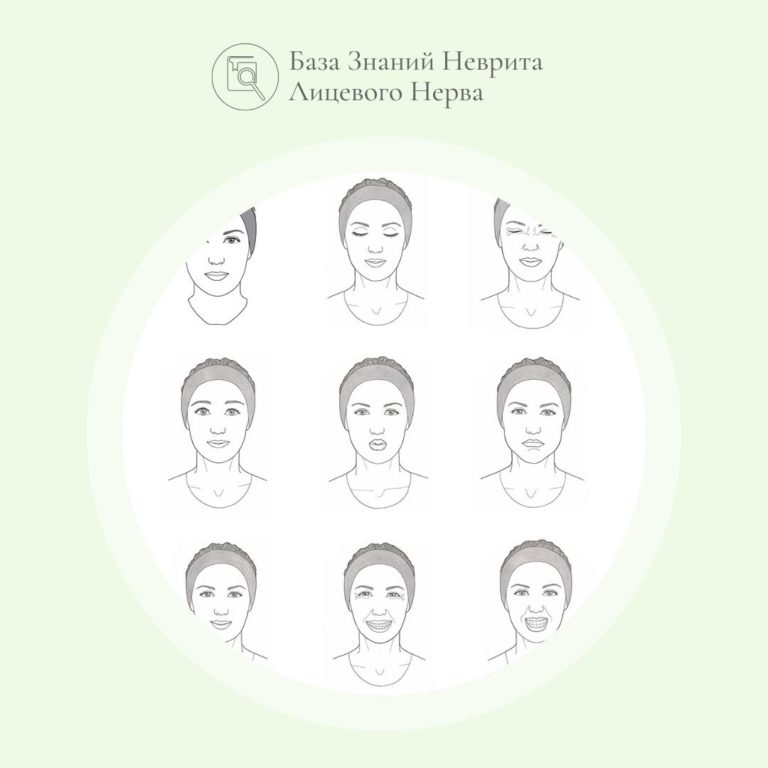
Recovery from Ramsay Hunt syndrome usually takes about a year. In our experience, the first small movements return between 3 weeks and 4 months after the onset, movement keeps improving for months, and the face settles after about 10 to 14 months. Many people are left with some lasting effects, such as synkinesis or tightness, which can be treated afterwards.
Table of contents
The timeline at a glance
| Time after onset | What usually happens | What you can do |
|---|---|---|
| First 3 days | Weakness, ear pain, rash, sometimes hearing loss or dizziness | See a doctor: antiviral plus steroid, ideally within 3 days |
| Weeks 1 to 3 | The rash crusts over; the face does not move yet | Protect the eye, rest, avoid strong exercises |
| 3 weeks to 4 months | First small movements return | Gentle, guided practice; avoid forcing the face |
| 4 to 10 months | Movement improves; synkinesis and tightness can appear | Watch for synkinesis; rehabilitation possible from about 8 months |
| 10 to 14 months | The face settles | Assess what remains |
| Years later | Remaining effects stay without treatment | Rehabilitation still possible, with no upper limit |
Why recovery takes longer than Bell’s palsy
Ramsay Hunt syndrome is caused by the shingles virus inflaming the facial nerve near the ear. The inflammation takes longer to calm down than in Bell’s palsy, so the nerve stays squeezed for longer and more of its fibres are damaged. Damaged fibres have to regrow all the way to the muscles, and nerves regrow slowly. That is why most people with Ramsay Hunt syndrome follow the long recovery path, not the quick one. Read more in What is Ramsay Hunt syndrome?
The first days: medical treatment
The first days matter most for the final result. See a doctor as soon as you notice the weakness. Treatment usually combines an antiviral against the shingles virus with a steroid such as prednisone, plus pain relief and eye protection. In one study, 75 in 100 people who started treatment within 3 days recovered completely, compared with 30 in 100 who started after 7 days. See Acute Bell’s palsy: what to do in the first weeks; the advice for the eye and for rest applies to Ramsay Hunt syndrome too.
This is general information, not medical advice. Please follow your doctor’s recommendations.
Weeks 1 to 3: waiting for the nerve
The rash crusts over and the pain usually eases, but the face often does not move at all yet. This is normal: the nerve fibres are still recovering from the swelling or starting to regrow. Protect your eye with drops and ointment, and tape it closed at night if it does not close. In our experience, strong facial exercises at this stage do not speed things up and can make later problems more likely.
3 weeks to 4 months: the first movements
In our clinic’s experience, the first small movements return somewhere between 3 weeks and 4 months after the onset. Often it starts with a twitch at the corner of the mouth or a little more eye closure. Learn what to look for in The first sign of recovery after Bell’s palsy and Ramsay Hunt syndrome.
If you see no movement at all after 4 months, talk to your doctor about a check of the nerve.
4 to 10 months: movement improves, side effects can appear
Movement keeps getting stronger. At the same time, regrowing fibres can connect to the wrong muscles. This is when synkinesis often shows up: the eye narrows when you smile, or the mouth pulls when you blink. Up to 45 in 100 people with Ramsay Hunt syndrome develop it. Tightness, an uneven smile and facial pain are common too.
10 to 14 months: the face settles
In our experience, the face settles after about 10 to 14 months. After this, the nerve itself changes very little on its own. What remains at this point usually stays, unless it is actively treated.
After recovery: long-term effects
Compared with Bell’s palsy, people with Ramsay Hunt syndrome are less likely to recover completely. Possible lasting effects include synkinesis, an uneven smile, facial tightness and pain, a dry or watering eye, hearing loss or ringing in the ear, and nerve pain after the rash (postherpetic neuralgia).
The clinic’s view is that synkinesis, tightness and asymmetry are patterns the brain learned during the long recovery, and that the brain can be retrained. We start rehabilitation from about 8 months after the onset, with no upper limit; programs usually last 6 to 12 months. See Ramsay Hunt syndrome treatment and rehabilitation, and read how Gabriela finished her rehabilitation three years after the onset in Gabriela’s Ramsay Hunt syndrome recovery story. For the emotional side, see Coping with long-term Bell’s palsy and Ramsay Hunt syndrome.
More than 8 months after Ramsay Hunt syndrome and still living with synkinesis, tightness or an uneven smile? Book a video consultation with Dr. Alex Pashov. He will look at your face and explain what is realistic.
Usually about a year. In our experience, first movements return between 3 weeks and 4 months, and the face settles after 10 to 14 months. Some effects can last longer without treatment.
Many people do, especially when antivirals and steroids start within 3 days. But full recovery is less likely than with Bell’s palsy, and lasting effects such as synkinesis are common.
This is common. The nerve fibres need time to regrow, and in our experience first movements can take up to 4 months. If nothing has returned after 4 months, ask your doctor to check the nerve.
Often it improves, but hearing loss or ringing in the ear can be permanent for some people. An ear, nose and throat doctor can test and follow your hearing.
Yes. We work with patients from about 8 months after the onset, with no upper limit.