When one side of the face suddenly droops, the first and most urgent question is: is this Bell’s palsy or a stroke? Both conditions can cause facial weakness, but they are fundamentally different in their cause, severity, and required response.
In this article, we explain the key differences between Bell’s palsy and stroke, how to recognize each, and what steps to take.
The most important difference: forehead involvement
The single most reliable way to distinguish Bell’s palsy from a stroke at the bedside is to look at the forehead.
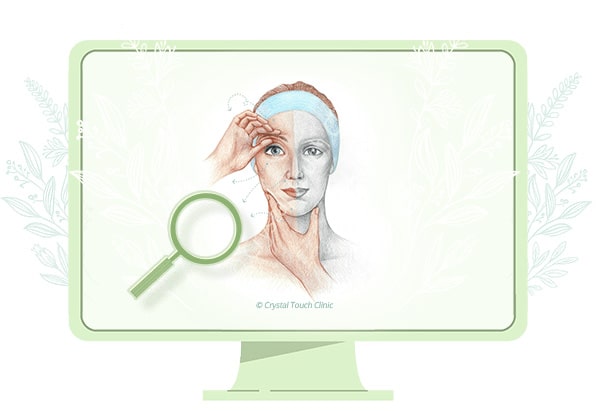
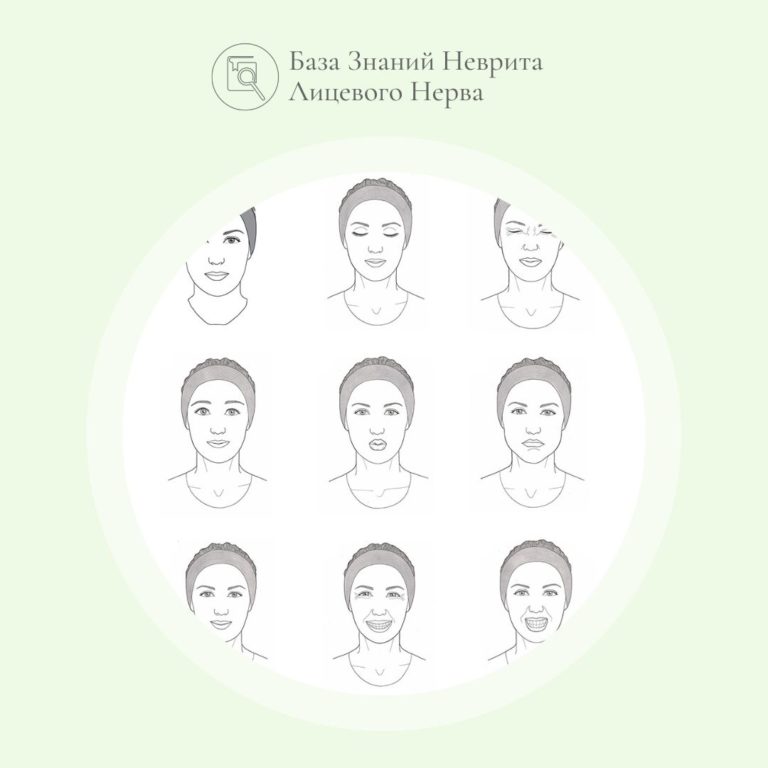
Bell’s palsy affects the entire half of the face, including the forehead. If you try to raise your eyebrows and the affected side does not move at all, this points towards Bell’s palsy. The eye on the affected side also typically cannot close fully.
A stroke usually spares the forehead. Because the forehead muscles receive nerve signals from both hemispheres of the brain, a stroke affecting one hemisphere will still leave the forehead functional. So if the forehead wrinkles normally on both sides but the lower face droops, this is more consistent with a stroke.
This is not an absolute rule, and a medical professional should always be consulted. But forehead involvement is the most well-known clinical distinction.
Other differences in symptoms
Beyond the forehead, there are several other differences that help distinguish the two conditions:
Bell’s palsy is isolated to the face. It is caused by damage to the facial nerve (a peripheral nerve), and its effects are limited to facial movements, taste, and sometimes hearing sensitivity on the affected side. You will not have weakness in your arm or leg, difficulty speaking (beyond what the facial weakness causes), or confusion.
A stroke affects the brain itself and often produces additional symptoms beyond the face: weakness or numbness in the arm or leg (usually on the same side as the facial droop), difficulty speaking or understanding speech, sudden severe headache, vision changes, dizziness, or confusion.
If there is any doubt, or if symptoms beyond the face are present, treat it as a medical emergency and call emergency services immediately.
Speed of onset
Both conditions develop quickly, but there are subtle differences. Bell’s palsy typically reaches its maximum severity within 48-72 hours. Many people notice it upon waking up or find it worsening over the course of a day or two.
A stroke tends to come on more suddenly — symptoms are often maximal within minutes. However, this is not always the case, and the speed of onset alone should not be used to rule out a stroke.
What causes each condition
Bell’s palsy is a peripheral facial palsy, meaning the damage occurs to the facial nerve itself, outside the brain. It is most commonly caused by viral reactivation (often herpes simplex virus) leading to inflammation and swelling of the nerve inside the bony canal of the skull. You can learn more in our article: What is the difference between facial palsy and Bell’s palsy.
A stroke is a central event — either a blocked blood vessel in the brain (ischemic stroke) or bleeding in the brain (hemorrhagic stroke). The facial weakness in a stroke is a consequence of brain damage, not nerve damage.
What to do
If you suspect a stroke: Call emergency services immediately. Time is critical. Use the FAST method: Face drooping, Arm weakness, Speech difficulty, Time to call emergency services.
If symptoms point to Bell’s palsy: See a doctor as soon as possible, ideally within 72 hours of onset. Early treatment with corticosteroids (prednisone) can help reduce nerve swelling and may improve your recovery outcome. Read our guide on what to do in the acute phase of Bell’s palsy.
Regardless of which condition you suspect, always seek medical evaluation. A healthcare professional can perform the necessary examinations to confirm the diagnosis.
Recovery outlook
The majority of Bell’s palsy cases recover well. About 70-80% of people recover within a few weeks. For the remaining 20-30%, recovery takes longer and may involve complications such as synkinesis. You can read more about the typical recovery process in our article: Bell’s palsy recovery time.
Stroke recovery depends on the severity and location of the brain damage, and is a separate medical process that involves different rehabilitation approaches.
If you have been diagnosed with Bell’s palsy and want to understand your recovery options, you can book an online video consultation or explore our Bell’s palsy knowledge base.